Learn about Kilimanjaro Helicopter Rescue Service, emergency evacuation, altitude safety, rescue procedures, insurance and what climbers should know before climbing.
Climbing Mount Kilimanjaro is an unforgettable adventure, but reaching Uhuru Peak at 5,895 metres (19,341 feet) also means preparing for the realities of high-altitude trekking. Most climbers complete their journey without requiring emergency evacuation, but serious altitude illness, injury or other medical emergencies can occasionally occur.
Understanding the Kilimanjaro helicopter rescue service and the wider mountain evacuation process can give climbers greater confidence when preparing for their adventure.
Helicopter evacuation is one part of the emergency-response system available around Mount Kilimanjaro. It is generally considered for serious situations where rapid evacuation is medically necessary and where the location, altitude and weather conditions allow an aircraft response. It should not be viewed as a routine alternative to normal mountain evacuation.
In many situations, a climber who becomes unwell can be assisted to descend by the mountain support team. Depending on the circumstances, evacuation may involve walking assistance, a stretcher or transportation to a suitable access point before onward medical transport.
At Sweet Memory Adventure, safety is an important part of every Kilimanjaro climb. Our guides monitor climbers throughout the trek and make decisions based on the condition of the individual, the altitude, weather and the safest available evacuation option.
What Is Kilimanjaro Helicopter Rescue Service?
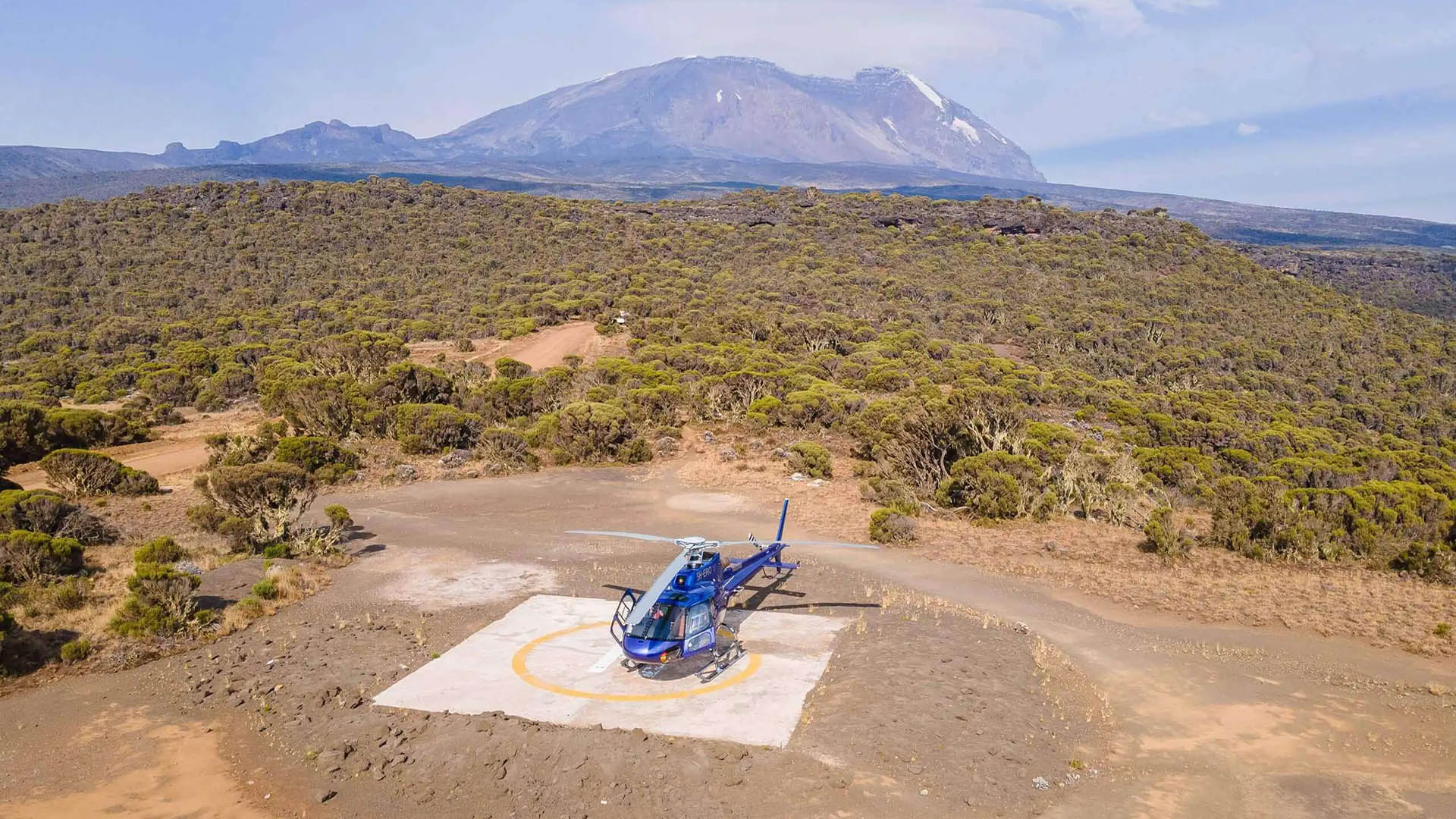
Kilimanjaro helicopter rescue refers to the use of an emergency helicopter to evacuate a climber from the mountain when a serious medical emergency or injury requires rapid evacuation and the operation is feasible.
Specialist aviation providers in Tanzania offer medical evacuation services for Kilimanjaro and other remote areas. For example, Kili MedAir states that its helicopter medical evacuation service operates 24/7 and can respond to emergencies involving injury, altitude sickness and other medical situations.
However, a helicopter cannot simply land anywhere on Mount Kilimanjaro.
High altitude, terrain, wind, cloud, visibility and other operational factors can affect whether an aircraft can safely reach a particular location. Current Kilimanjaro rescue guidance notes that helicopter operations are particularly dependent on altitude and weather conditions.
This is why climbers should understand that helicopter rescue is an emergency resource rather than a guaranteed service available at every point on the mountain.
Why Would a Climber Need Helicopter Evacuation on Kilimanjaro?
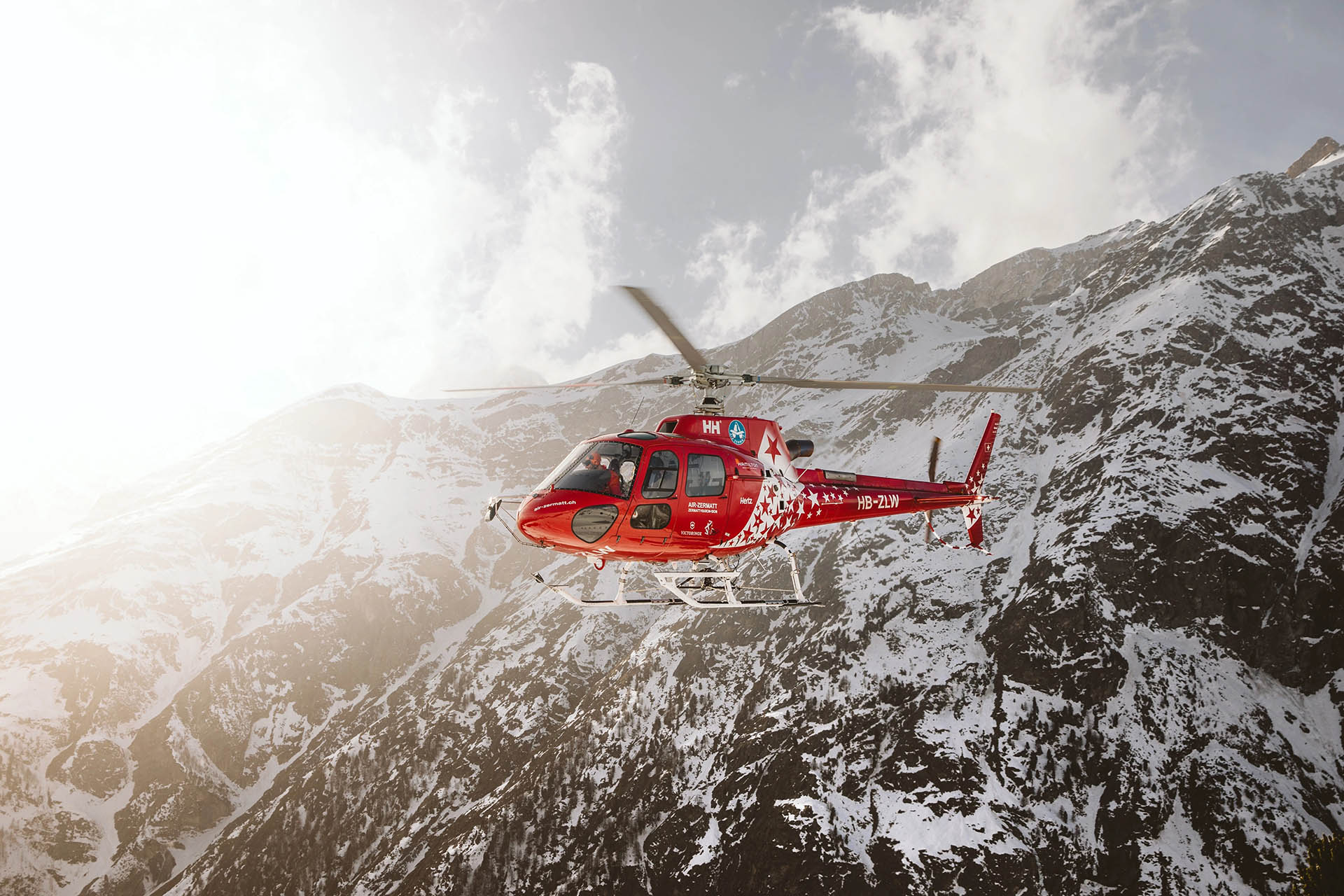
Most climbers who experience difficulties on Kilimanjaro can be assisted through controlled descent.
However, there are situations where a rapid evacuation may be considered.
A serious altitude-related emergency is one of the most important concerns. Severe forms of altitude illness can become life-threatening and require immediate descent and medical attention.
A serious injury is another possible reason for emergency evacuation. A climber who suffers a significant fall, fracture or other injury may be unable to descend safely without specialised assistance.
Other medical emergencies can also require evacuation depending on their severity and the ability of the mountain team to safely manage the situation.
The decision to evacuate is made based on the climber’s condition and the circumstances on the mountain. It is not simply a matter of requesting a helicopter because someone feels uncomfortable or tired.
Altitude Sickness and Kilimanjaro Rescue
Altitude is one of the most important safety considerations when climbing Kilimanjaro.
As you ascend, the amount of oxygen available in the air decreases. Your body needs time to adapt to the increasing altitude, which is why a properly designed itinerary includes gradual ascent and opportunities for acclimatisation.
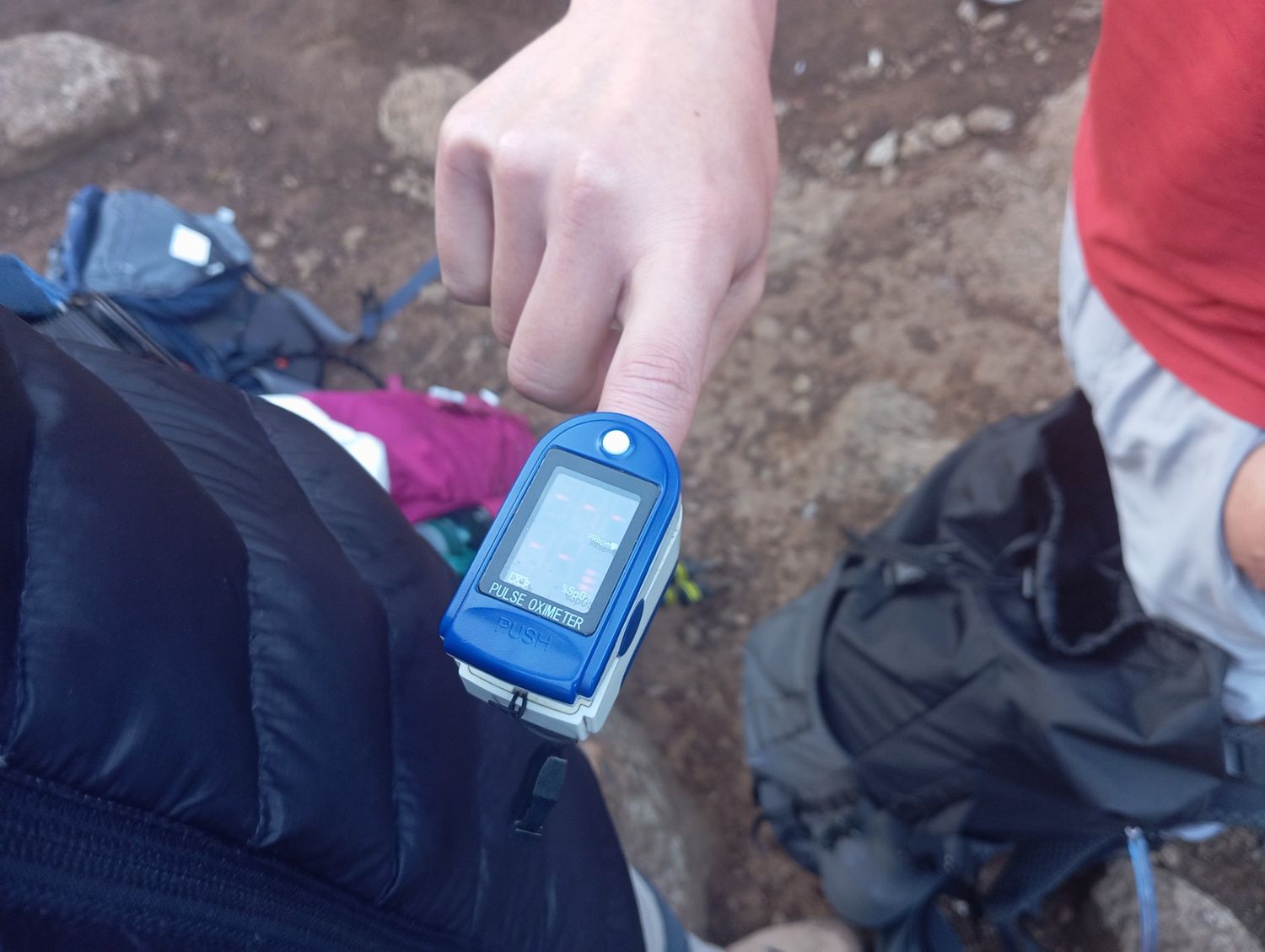
Mild altitude symptoms can include headache, fatigue, dizziness, reduced appetite and nausea. More serious altitude illness requires immediate attention.
A key principle on Kilimanjaro is that severe altitude illness should never be ignored.
If a climber develops concerning symptoms, the guide may recommend immediate descent. In many cases, descent is the most effective response and does not require helicopter evacuation.
For this reason, a good Kilimanjaro operator should focus on early recognition of altitude problems rather than waiting until an emergency becomes critical.
How Does Emergency Evacuation Work on Kilimanjaro?
The exact procedure depends on the nature and location of the emergency.
When a climber becomes seriously ill or injured, the guide first assesses the situation and determines the safest course of action. Communication equipment can be used to contact the operator’s support team and coordinate assistance.
If the climber can safely descend, the mountain team may organise a controlled descent.
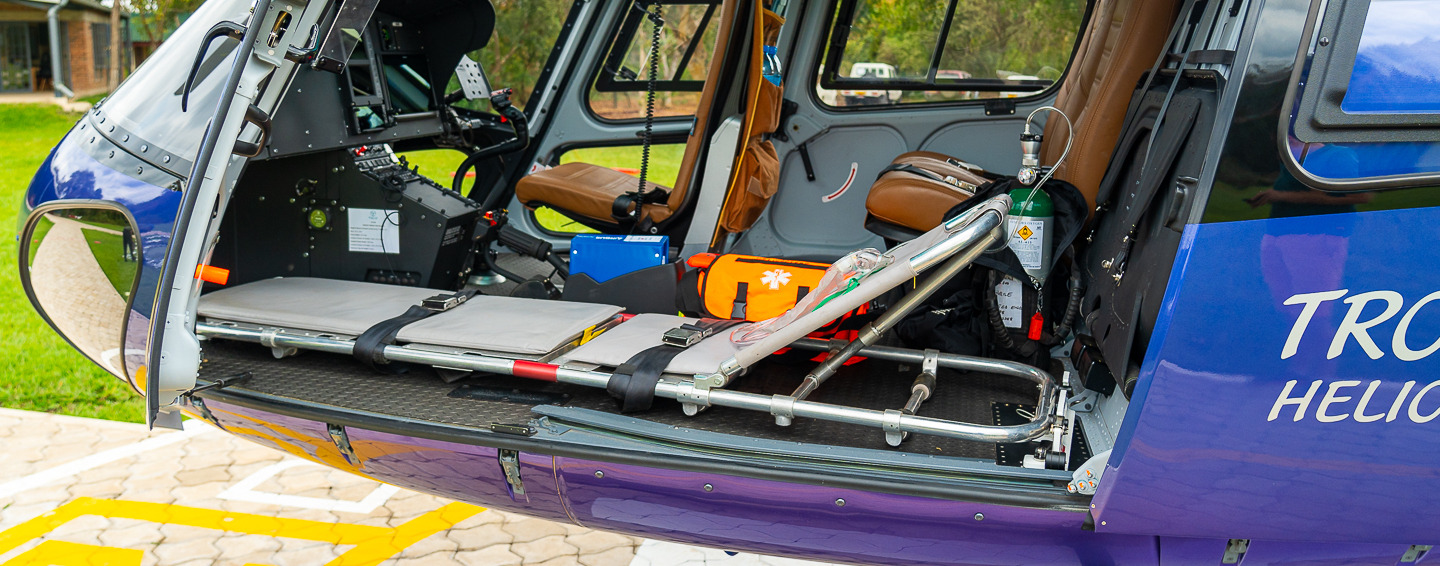
If the climber cannot walk safely, a stretcher evacuation may be required.
If the situation is sufficiently serious and helicopter evacuation is feasible, the guide and operator can coordinate with the relevant aviation and rescue service.
The climber may then be transported to an appropriate medical facility for further assessment and treatment.
This layered approach is important because not every emergency requires a helicopter.
In fact, ground evacuation and controlled descent remain important parts of mountain rescue.
Can a Helicopter Reach the Summit of Kilimanjaro?
This is one of the most common questions asked by climbers.
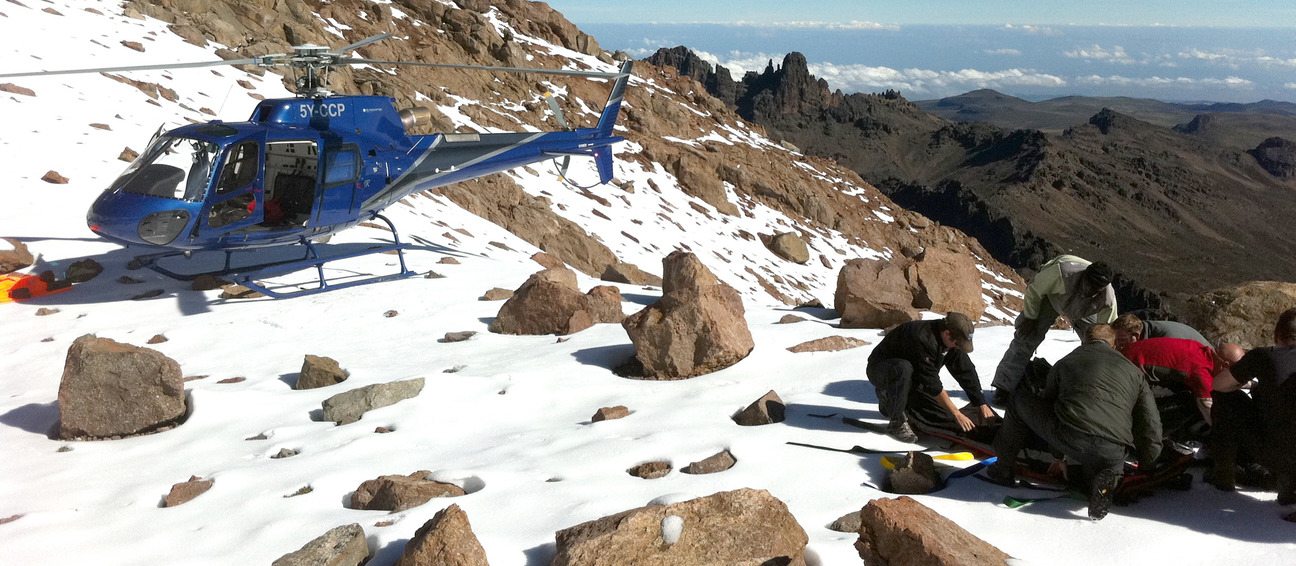
A helicopter cannot be assumed to be able to land at any point on Kilimanjaro. The summit area is extremely high, and aviation performance is affected by thin air, terrain and weather.
Current rescue information for Kilimanjaro indicates that helicopter operations have altitude limitations and that aircraft may not be able to reach the highest parts of the mountain. In some circumstances, a climber may first need to be moved to a lower and more suitable location before an aircraft can be used.
Weather is another major consideration.
Strong winds, heavy rain, cloud cover or poor visibility can make helicopter operations unsafe. Consequently, helicopter rescue cannot be guaranteed simply because a climber has insurance or belongs to a rescue programme.
The priority is always safe evacuation using the most appropriate method available.
What Happens If Helicopter Rescue Is Not Possible?
If a helicopter cannot reach the climber because of altitude, weather or another operational limitation, other evacuation methods may be used.
Depending on the location and condition of the climber, the mountain team may organise assisted descent or stretcher evacuation.
This is why climbers should not assume that helicopter evacuation is the only form of rescue available.
A well-prepared Kilimanjaro expedition has multiple layers of emergency planning.
The guide’s ability to recognise problems early, communicate effectively and make timely decisions can be just as important as helicopter access.
Does the Kilimanjaro Park Rescue System Cover Helicopter Evacuation?
This is an area where climbers should pay close attention to the details of their package and insurance.
Kilimanjaro park fees include provisions related to rescue arrangements, but climbers should not automatically assume that every possible cost associated with helicopter evacuation, hospital treatment or international medical repatriation is covered.
Different operators and insurance policies can define rescue, evacuation and medical treatment differently.
This is why climbers should ask their tour operator exactly what is included in their climb package and separately check their travel insurance policy.
Rather than assuming that a phrase such as “rescue included” means everything is covered, ask specifically about helicopter evacuation, medical treatment and repatriation.
Do You Need Travel Insurance for Kilimanjaro Helicopter Rescue?
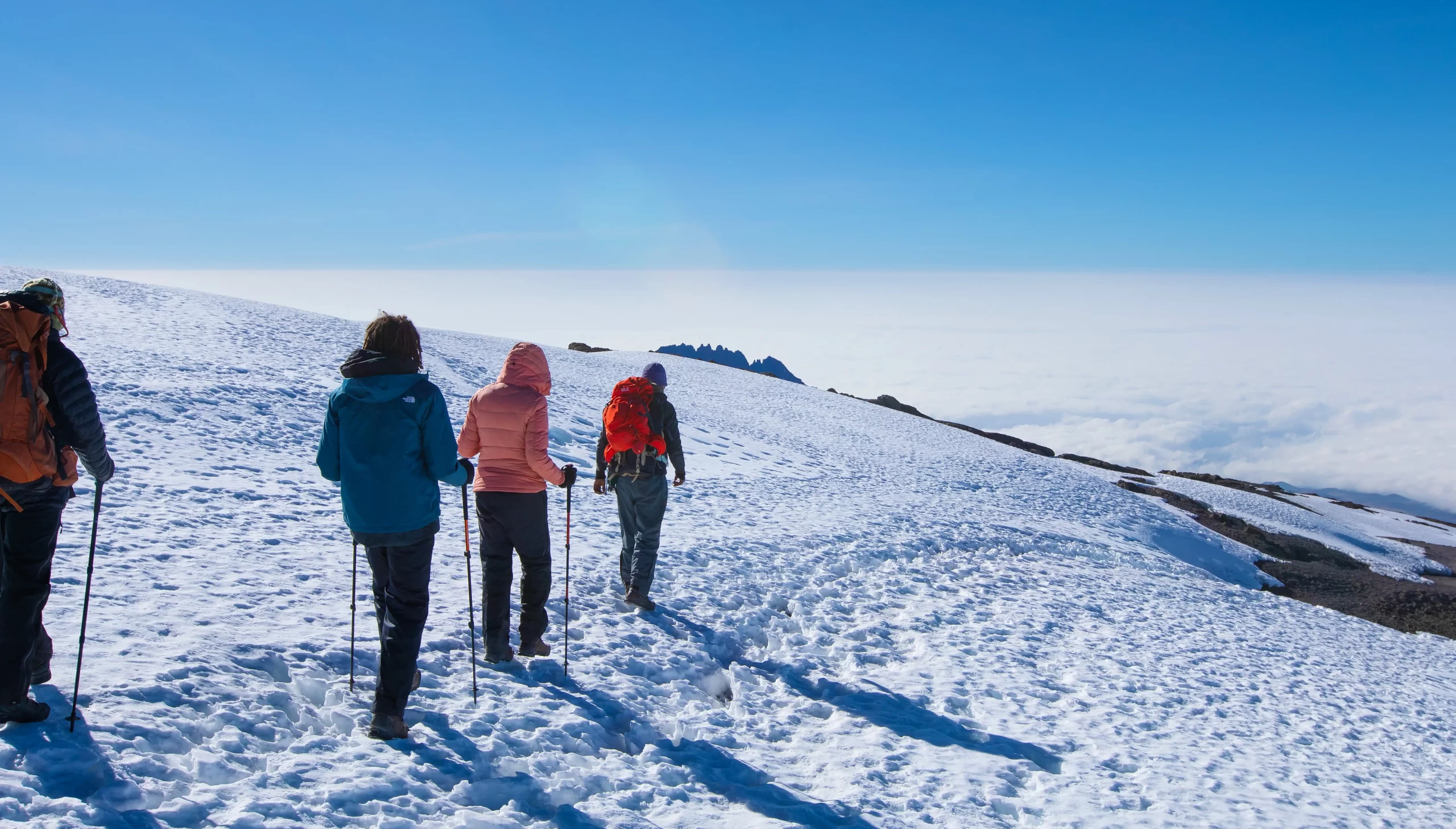
Having appropriate travel insurance is strongly recommended for anyone climbing Kilimanjaro.
However, ordinary travel insurance is not necessarily sufficient.
Kilimanjaro reaches 5,895 metres, and many standard travel policies have restrictions on high-altitude trekking or adventure activities. Some policies may also treat helicopter rescue differently from ordinary medical evacuation.
Specialist Kilimanjaro insurance guidance recommends checking that the policy explicitly covers trekking at the altitude of the Kilimanjaro summit and emergency evacuation.
Before travelling, climbers should carefully check their policy for the maximum covered trekking altitude, emergency medical expenses, evacuation and repatriation.
Do not assume that a policy covering “adventure activities” automatically covers every aspect of a Kilimanjaro climb.
What Should Kilimanjaro Insurance Cover?
The exact requirements depend on your insurer and nationality, but climbers should look carefully at whether their policy provides appropriate protection for high-altitude trekking.
The policy should clearly address the altitude involved in a Kilimanjaro climb and the possibility of emergency medical evacuation.
It is also important to understand whether the policy covers hospital treatment after evacuation and, where medically necessary, transportation to the traveller’s home country.
Some specialist insurance providers specifically advise climbers to confirm coverage to at least 6,000 metres because Kilimanjaro’s summit is 5,895 metres.
Always read the actual terms and conditions of your policy rather than relying solely on a summary or sales description.
How Much Does Kilimanjaro Helicopter Rescue Cost?
There is no single universal price for a Kilimanjaro helicopter evacuation.
The cost can vary depending on the aviation provider, location of the climber, nature of the emergency, aircraft availability, medical requirements and onward transportation.
Because prices and arrangements can change, climbers should avoid relying on figures found on old blogs or social media posts.
The more important question is whether your insurance provides adequate emergency evacuation coverage and whether it covers the particular circumstances of a Kilimanjaro climb.
Kili MedAir, for example, states that climbers without appropriate insurance may be responsible for the cost of evacuation themselves.
For this reason, appropriate insurance should be arranged before travelling to Tanzania.
Is Helicopter Rescue Available on Every Kilimanjaro Route?
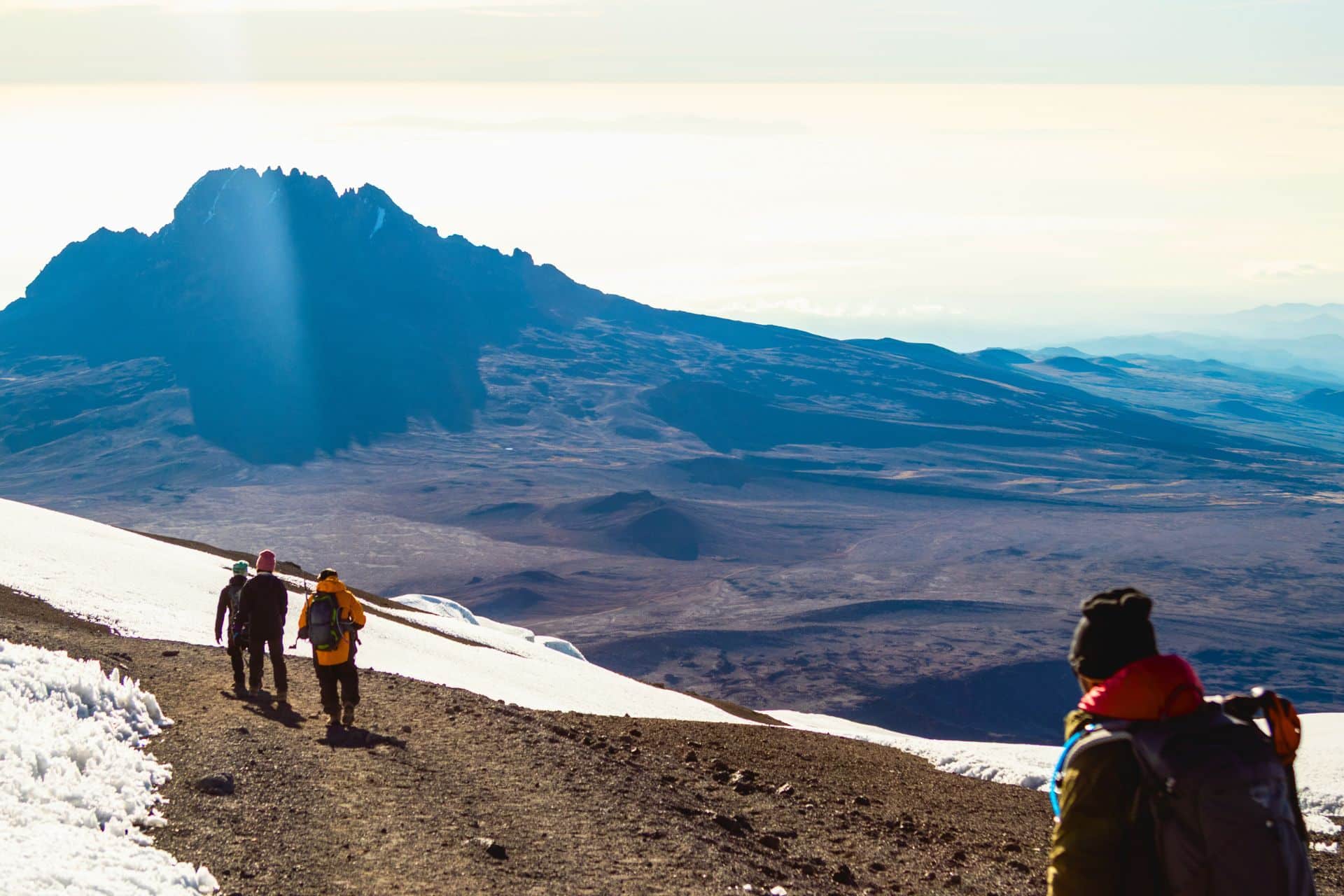
Kilimanjaro has several climbing routes, including Machame, Lemosho, Marangu, Rongai, Northern Circuit and Umbwe.
The availability and practicality of emergency evacuation can differ according to location and route.
Some areas are more accessible to ground evacuation than others, while high-altitude sections present greater challenges for any type of rescue.
This is another reason why the choice of route should not be based solely on scenery or popularity.
Your operator should have an emergency-response plan appropriate to the route being used.
How Do Kilimanjaro Guides Prepare for Emergencies?
Experienced mountain guides play an essential role in preventing small problems from becoming major emergencies.
Before and during a climb, guides monitor the group, observe changes in behaviour and physical condition, and communicate with climbers about symptoms and how they are feeling.
A good guide will not encourage a climber to continue simply because reaching the summit is important.
Sometimes the safest decision is to stop ascending and descend.
This is particularly important with altitude-related symptoms because continuing to climb when seriously unwell can increase the danger.
Communication equipment is also important on the mountain. Depending on the operator, emergency communication may include satellite phones or satellite messaging devices.
The objective is to ensure that the guide can communicate with the support team even when normal mobile phone coverage is unavailable.
Why Early Descent Is Often Better Than Helicopter Rescue
It is important to understand that a helicopter should not be the first solution to every medical problem on Kilimanjaro.
If a climber develops symptoms of altitude illness at a location where walking descent is safe, the fastest and most effective solution may simply be to descend.
Descending even several hundred metres can make a significant difference to someone experiencing altitude-related symptoms.
Experienced guides therefore place considerable emphasis on early recognition and timely descent.
A helicopter becomes relevant when the situation is sufficiently serious, rapid evacuation is medically necessary and an aircraft can safely operate in the area.
What Happens After Evacuation?
Helicopter evacuation is only one part of the emergency process.
After leaving the mountain, the climber may require medical assessment and treatment at an appropriate healthcare facility.
Depending on the seriousness of the condition, further medical transportation may be necessary.
This could involve transfer to a hospital in Moshi or another appropriate medical facility, followed by additional arrangements if specialist treatment or repatriation is required.
For this reason, travel insurance should ideally cover more than the initial evacuation.
Climbers should also understand what happens if they need to remain in Tanzania for medical treatment or if they are medically unable to continue their planned holiday.
Does Every Kilimanjaro Climber Need Helicopter Rescue Coverage?
While helicopter evacuation is not required for every climber, having appropriate emergency evacuation coverage is a sensible part of preparing for a high-altitude adventure.
The important point is not that you should expect to need a helicopter.
Most climbers do not.
The point is that an emergency at high altitude can be expensive and complicated, and adequate insurance can help protect you from unexpected financial responsibility.
Kilimanjaro-specific insurance should be considered part of responsible trip planning.
What Can Climbers Do to Reduce the Risk of Emergency Evacuation?
Good preparation can reduce the likelihood of serious problems.
One of the most important factors is choosing an itinerary that allows adequate acclimatisation.
Routes with more days generally provide more opportunity for gradual altitude gain and adaptation. This does not eliminate the possibility of altitude sickness, but it can support a safer and more comfortable ascent.
Climbers should also maintain a sensible pace, stay hydrated, eat adequately and communicate honestly with their guides.
If you feel unwell, tell your guide.
Trying to hide symptoms because you are worried about missing the summit can create unnecessary danger.
The summit is never more important than your safety.
Choosing a Kilimanjaro Operator With a Good Safety Plan
When comparing Kilimanjaro tour operators, price should not be the only consideration.
Ask how the company manages emergencies and what communication equipment its mountain teams carry.
It is also worth asking how the guides monitor altitude-related symptoms, what happens if someone needs to descend early and how emergency evacuation is coordinated.
A professional operator should be able to explain its safety procedures clearly.
The company should also be transparent about what is and is not included in the climbing package.
Kilimanjaro Helicopter Rescue and Sweet Memory Adventure
At Sweet Memory Adventure, we understand that a successful Kilimanjaro climb is not simply about reaching the summit.
It is about reaching the mountain prepared, climbing responsibly and making good decisions throughout the journey.
Our Kilimanjaro climbs are led by experienced mountain guides who monitor climbers throughout the trek and respond to changing conditions.
We also understand the importance of having an emergency plan.
If a climber becomes unwell or injured, our mountain team assesses the situation and determines the safest course of action. Depending on the circumstances, this may involve rest, descent, assisted evacuation or coordination of further emergency assistance.
We encourage all our Kilimanjaro clients to arrange suitable travel insurance before their climb and to confirm that their policy covers high-altitude trekking and emergency evacuation.
Final Thoughts on Kilimanjaro Helicopter Rescue Service
A helicopter rescue service provides an important additional layer of emergency support for people climbing Mount Kilimanjaro, but it should never be considered a substitute for responsible trekking, proper acclimatisation and experienced mountain guides.
Most climbers who experience problems on Kilimanjaro can be assisted through early intervention and descent.
In more serious situations, evacuation arrangements may involve stretcher assistance, ground transportation and, where conditions allow, helicopter medical evacuation.
The most important preparation is therefore not simply knowing that a helicopter exists. It is understanding your operator’s emergency procedures, choosing an appropriate itinerary, listening to your guides and having travel insurance that properly covers your climb.
At Sweet Memory Adventure, we believe that good mountain safety begins long before you reach the trailhead.
Prepare well, climb responsibly, listen to your body and respect the mountain.
Kilimanjaro is an incredible adventure—and getting home safely is always more important than reaching the summit.
Frequently Asked Questions About Kilimanjaro Helicopter Rescue
Is there a helicopter rescue service on Mount Kilimanjaro?
Specialist aviation providers in Tanzania offer helicopter medical evacuation services for Kilimanjaro and other remote areas. However, helicopter availability depends on the emergency, location, weather, altitude and operational conditions.
Can a helicopter rescue me from Uhuru Peak?
A helicopter should not be assumed to be able to reach or land at Uhuru Peak. The extreme altitude and mountain environment create significant aviation limitations. In some emergencies, the climber may first need to descend to a lower and more suitable location.
What happens if I become sick on Kilimanjaro?
Your guide will assess your condition and determine the safest response. Depending on the severity, you may be advised to rest, stop ascending or descend. More serious cases may require stretcher evacuation or further emergency assistance.
Does altitude sickness always require helicopter evacuation?
No. Many cases can be managed through immediate descent. Helicopter evacuation is generally considered for serious emergencies where rapid evacuation is necessary and operational conditions permit.
Does travel insurance cover helicopter rescue on Kilimanjaro?
It depends entirely on your policy. Some travel insurance policies exclude high-altitude trekking or have altitude limits below Kilimanjaro’s summit. Always check the policy’s altitude, evacuation and adventure-activity provisions before travelling.
How high does insurance need to cover for Kilimanjaro?
Kilimanjaro’s summit is 5,895 metres. Some specialist providers recommend policies covering trekking to at least 6,000 metres, but the exact requirements vary by insurer. Always check the terms of your individual policy.
Is helicopter rescue guaranteed if I have insurance?
No. Insurance provides financial coverage according to the policy terms; it does not guarantee that a helicopter can operate in every location or weather condition. Aviation safety and medical considerations determine whether an aircraft can be dispatched.
Can a helicopter operate during bad weather?
Helicopter operations can be affected by cloud, wind, rain and visibility. If flying conditions are unsafe, alternative evacuation arrangements may be necessary.
What should I check before booking a Kilimanjaro climb?
Ask your tour operator about emergency procedures, communication equipment, evacuation arrangements and what is included in the climbing package. You should also obtain travel insurance that specifically covers high-altitude trekking and emergency medical evacuation.
Is helicopter evacuation included in every Kilimanjaro climbing package?
Not necessarily. Different operators structure their packages differently. Ask for clear information about what is included in your particular climb and what costs remain your responsibility.
How can I reduce the risk of needing emergency evacuation?
Choosing an itinerary with adequate acclimatisation time, maintaining a sensible pace, communicating symptoms early and following your guide’s instructions can help reduce the risk of serious altitude-related problems.
Does Sweet Memory Adventure provide Kilimanjaro emergency support?
Sweet Memory Adventure’s mountain teams follow emergency procedures and assess climbers throughout the trek. When a serious emergency occurs, the appropriate evacuation and medical-support options are coordinated according to the climber’s condition and circumstances.