
Serengeti Migration Safari
The Experience
The world’s greatest wildlife migration
The Serengeti Migration Safari delivers an unforgettable journey through Tanzania’s legendary Serengeti National Park, home to one of the most remarkable natural events on the planet. Each year, millions of wildebeest, zebras, and other grazing animals move across the vast plains in search of fresh pasture and water, creating one of the world’s greatest wildlife spectacles.
Travelers on this safari witness dramatic scenes of nature in motion—huge herds crossing open landscapes, braving powerful rivers, and facing predators such as lions and crocodiles along the way. This extraordinary migration showcases the raw beauty and rhythm of the wild, offering a powerful glimpse into the circle of life. Combined with the Serengeti’s stunning scenery, the experience becomes a truly unforgettable adventure for anyone passionate about wildlife and nature.
Serengeti Great Migration In Details
When planning a Serengeti safari, many travelers hope to time their visit with the Great Migration. However, pinpointing exactly when it will occur is not possible. The timing always carries some level of uncertainty, and while typical migration patterns can be described, nature does not follow a strict schedule.
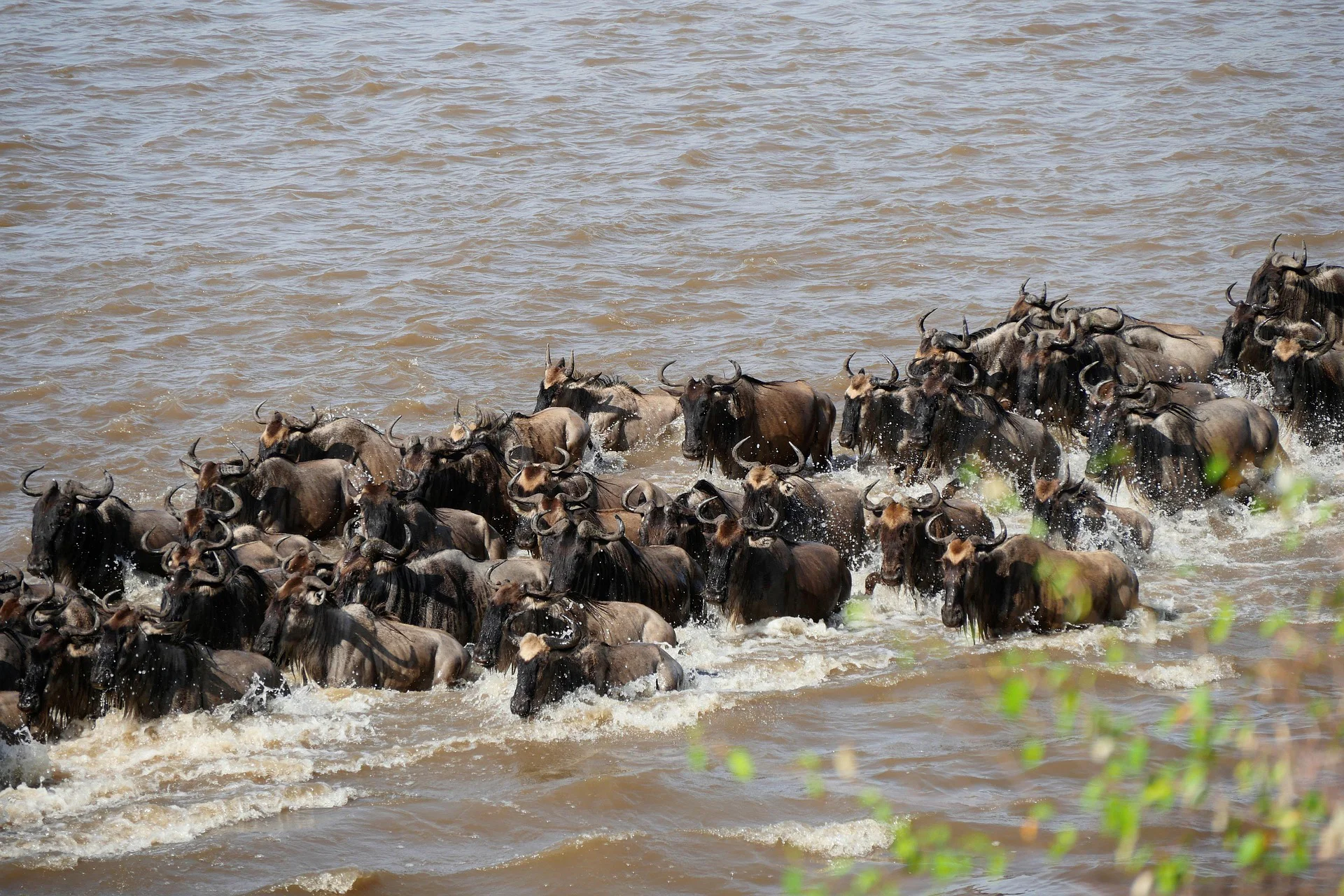
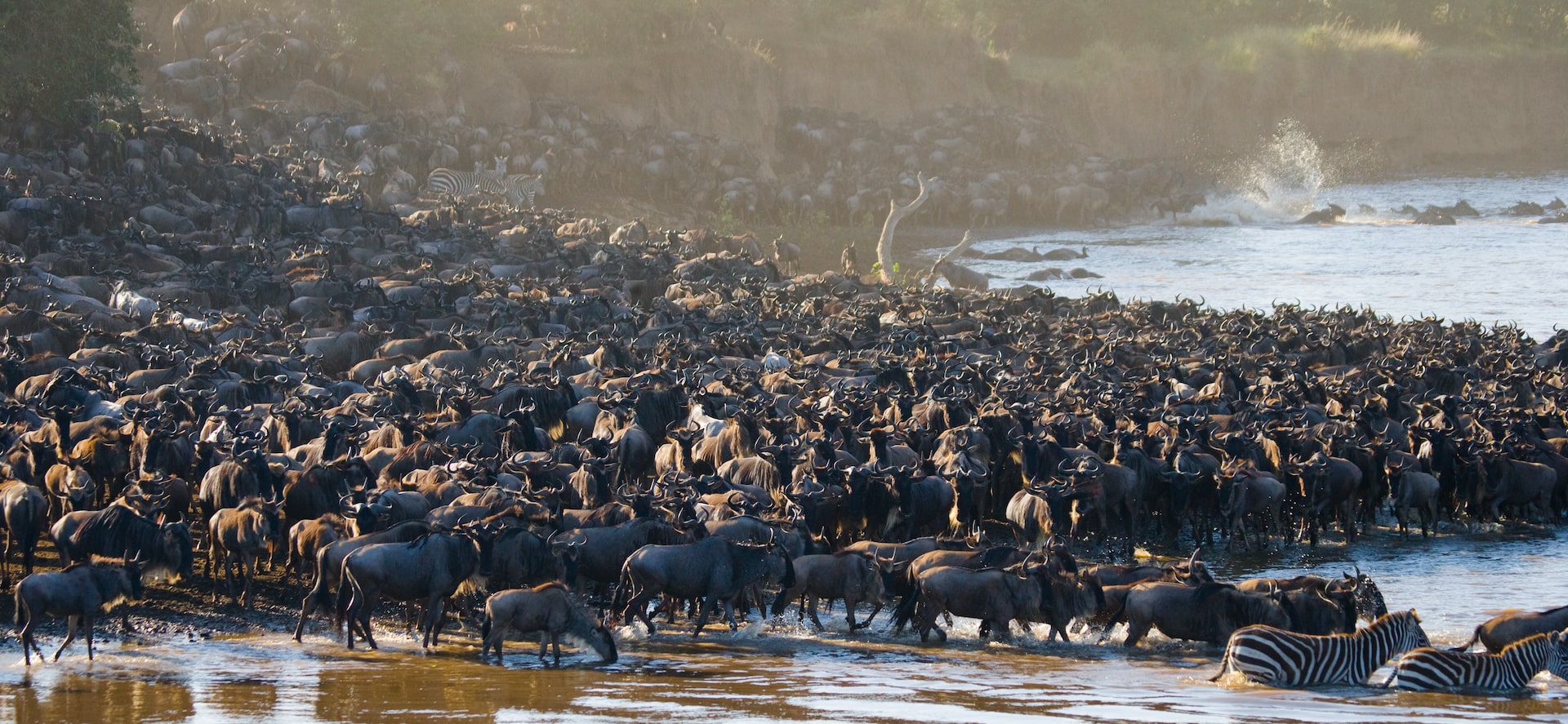
This incredible movement involves around two million herbivores, mainly wildebeest along with large numbers of zebra, Thomson’s gazelle, Grant’s gazelle, and eland, moving across Serengeti National Park in search of fresh grazing and water. It is widely considered one of the greatest wildlife spectacles in Africa—and arguably the world. Although the migration generally follows a seasonal cycle influenced by rainfall, its exact timing and location can vary from year to year.
Why do wildebeest migrate?
Wildebeest move mainly in search of water and fresh grazing land. In the Serengeti ecosystem, their annual migration is guided by seasonal rainfall patterns, which trigger the growth of new, nutrient-rich grass. As dry conditions spread and local pastures become exhausted, the herds gradually shift toward areas that have recently received rain and offer greener vegetation.
This constant movement is essentially a survival strategy, as the animals follow the rains to secure reliable food and water sources throughout the year. It supports their survival and reproduction, especially during calving periods when nutritional needs are high. The migration also helps balance the ecosystem by preventing overgrazing in one area, giving vegetation time to recover and maintain ecological stability.
Ready for your African Adventure?
Share your travel dreams, and we’ll transform them into a fully customized luxury safari or private tour designed just for you.
Safari Sample Itinerary
Tanzanian safaris offer something for every adventurer, be it thrilling game drives, enchanting hot air balloon excursions, or indulgent retreats in luxury lodges. Explore our customizable packages designed to cater to your every need.
- 5 Days

- 3 Days
- 4 Days
Frequently Asked Questions
A Tanzania Migration Safari is a guided wildlife adventure that follows the legendary Great Migration across the Serengeti and northern Tanzania. Travelers witness millions of wildebeest, zebras, and other grazing animals as they move in search of fresh pastures, offering some of the world’s most spectacular wildlife viewing experiences.
The Great Migration is a year-round phenomenon, but the timing varies depending on the location. December to March is ideal for witnessing calving in the southern Serengeti, June to July for the trek across the western corridor and Grumeti River, and August to September for dramatic river crossings in the northern Serengeti and Maasai Mara.
In addition to the migrating herds of wildebeest and zebras, you can encounter predators such as lions, cheetahs, leopards, and crocodiles. Other wildlife includes elephants, giraffes, hippos, and a variety of antelope species. Birdlife is also abundant, with hundreds of species including vultures, eagles, and storks.
Yes. Migration safaris are suitable for families, couples, and first-time travelers when guided by experienced operators. Safaris are conducted in 4x4 vehicles with professional guides, ensuring comfort, safety, and close-up wildlife viewing for all ages.
Essential items include neutral-colored clothing, a wide-brimmed hat, sunglasses, sunscreen, binoculars, a camera with a zoom lens, and comfortable shoes. Layered clothing is recommended for early morning or evening drives, and a small backpack is useful for personal items.
For the best experience, most Migration Safaris last 5–10 days, allowing travelers to follow the herds across different regions of the Serengeti, witness river crossings, and enjoy multiple game drives without rushing.
