Discover common mistakes to avoid when booking Kilimanjaro climbing packages. Learn how to choose the right route, duration, operator and price for a safer trek.
Introduction: Book Your Kilimanjaro Climb with Confidence
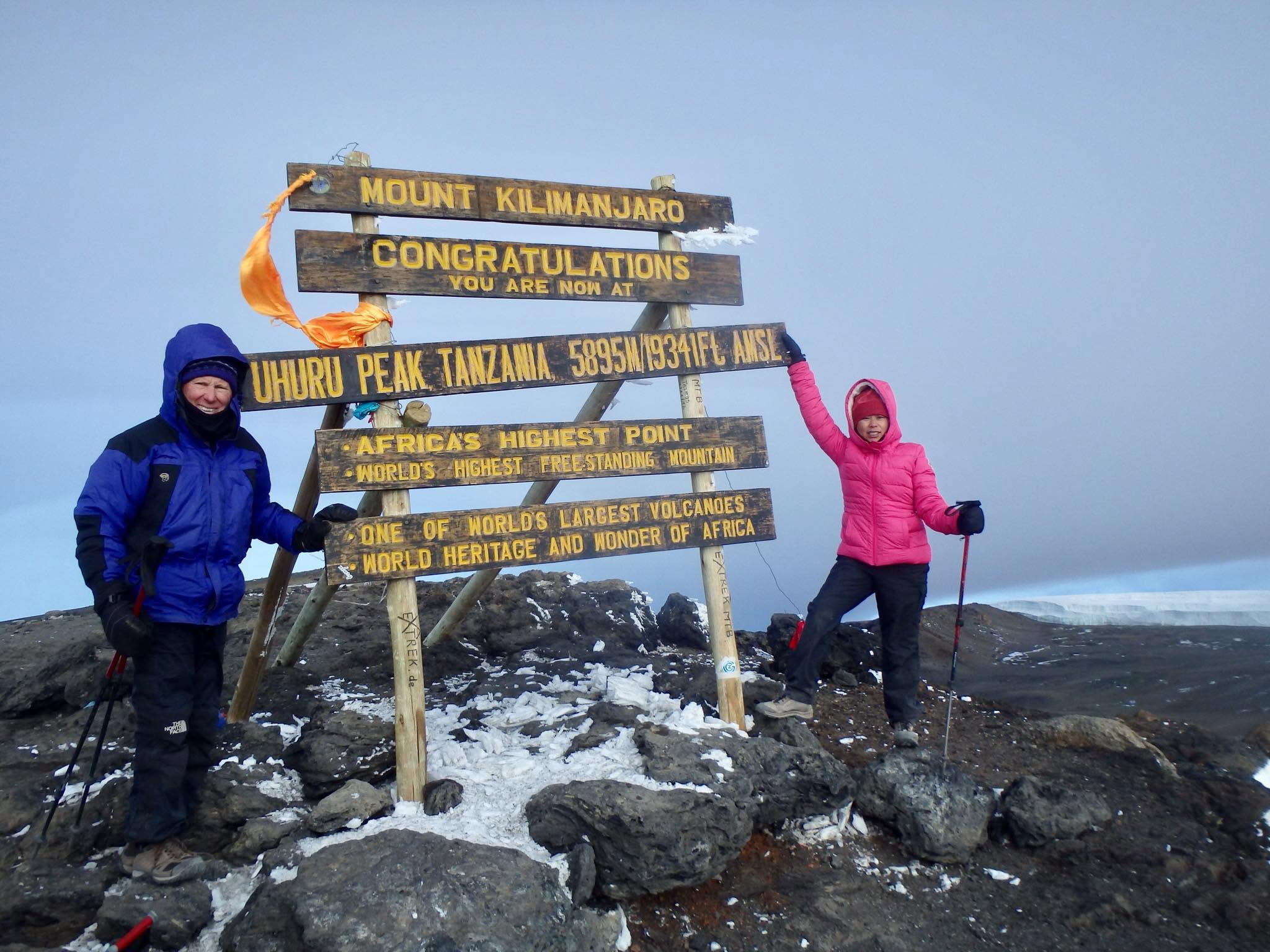
Climbing Mount Kilimanjaro is an extraordinary adventure and a major travel goal for many outdoor enthusiasts. Standing at 5,895 metres (19,341 feet) above sea level, Mount Kilimanjaro is Africa’s highest mountain and one of the world’s most recognized trekking destinations. Every year, climbers from different countries travel to Tanzania to experience its changing landscapes, challenging mountain trails and unforgettable journey towards Uhuru Peak.
However, planning a successful Kilimanjaro adventure involves more than choosing a departure date and paying for a climbing package. The decisions you make before arriving in Tanzania can influence your overall experience, from the route and number of trekking days to the quality of mountain support, accommodation arrangements, safety procedures and the services provided by your tour operator.
One of the biggest challenges for first-time climbers is knowing which Kilimanjaro climbing package offers the right balance of value, comfort, safety and acclimatization time. Some travellers focus mainly on finding the cheapest price, while others select the shortest itinerary because they have limited holiday time. Unfortunately, overlooking important details can lead to unnecessary expenses, uncomfortable trekking conditions or an itinerary that does not properly match their needs.
Understanding the common mistakes to avoid when booking Kilimanjaro climbing packages can help you make a more informed decision. Whether you are planning a private climb, joining a scheduled group departure or organizing your first mountain adventure, this guide explains what to consider before confirming your booking.
At Sweet Memory Adventure, we encourage climbers to compare packages carefully, ask questions and understand what their chosen itinerary includes before making a payment.
1. Choosing the Cheapest Kilimanjaro Climbing Package Without Comparing Services
One of the most common mistakes when booking Kilimanjaro climbing packages is selecting an operator based entirely on the lowest advertised price.
It is understandable that travellers want to manage their budgets, especially when planning an international holiday. However, an unusually cheap climbing package may not provide the same level of service, preparation, equipment or mountain support as a more comprehensive package.
Climbing Kilimanjaro requires considerable logistical planning. Operators must arrange park fees, camping or hut accommodation, meals, professional guides, porters, transportation, mountain equipment and other essential services. These costs contribute significantly to the overall price of a climb.
When comparing different quotations, do not look at the final price alone. Ask what services are included, whether the package covers all applicable park fees, what type of accommodation is provided before and after the trek, how meals are arranged and whether the operator supplies suitable camping equipment.
It is also important to understand how the company supports its mountain crew. Responsible operators should have clear arrangements for fair payment, suitable food, appropriate equipment and reasonable porter workloads.
A lower price is not automatically a bad choice, and a more expensive package does not automatically guarantee better service. The important thing is understanding what you are paying for and whether the company can explain its services transparently.
What to do instead: Request a detailed quotation from your shortlisted operators and compare the actual services, not just the advertised prices. A transparent package makes it easier to understand the value of your investment.
2. Booking a Short Kilimanjaro Itinerary to Save Time
Another major mistake is choosing the shortest available Kilimanjaro climbing itinerary without considering the importance of acclimatization.
Many travellers have limited holiday schedules and want to complete their climb within the shortest possible period. While shorter routes may appear convenient, ascending too quickly gives the body less time to adjust to decreasing oxygen availability at higher elevations.
Altitude-related illness is one of the main challenges climbers face on Kilimanjaro. Symptoms can include headaches, nausea, dizziness, fatigue and difficulty sleeping. Serious altitude illness can become life-threatening, which is why climbers and their guides must take symptoms seriously.
A longer itinerary generally provides more opportunities for gradual ascent, rest and acclimatization. For many climbers, choosing an itinerary of seven or eight days, or longer where appropriate, is worth considering rather than automatically selecting a compressed schedule.
For example, the Machame Route is commonly offered in six- and seven-day variations, while the Lemosho Route is often arranged over seven or eight days. The Northern Circuit usually takes eight to nine days or longer, depending on the itinerary. The best choice depends on the route design, sleeping-altitude profile, individual health and the operator’s safety arrangements.
Remember that additional days do not eliminate altitude risks, and no itinerary can guarantee reaching the summit. However, allowing adequate time for acclimatization can make the experience more manageable and improve your opportunity to adapt to the mountain environment.
What to do instead: Compare the number of days spent ascending, the daily elevation gains, overnight sleeping altitudes and available acclimatization opportunities. Discuss the itinerary with your operator before booking.
3. Selecting a Kilimanjaro Route Without Understanding Its Differences
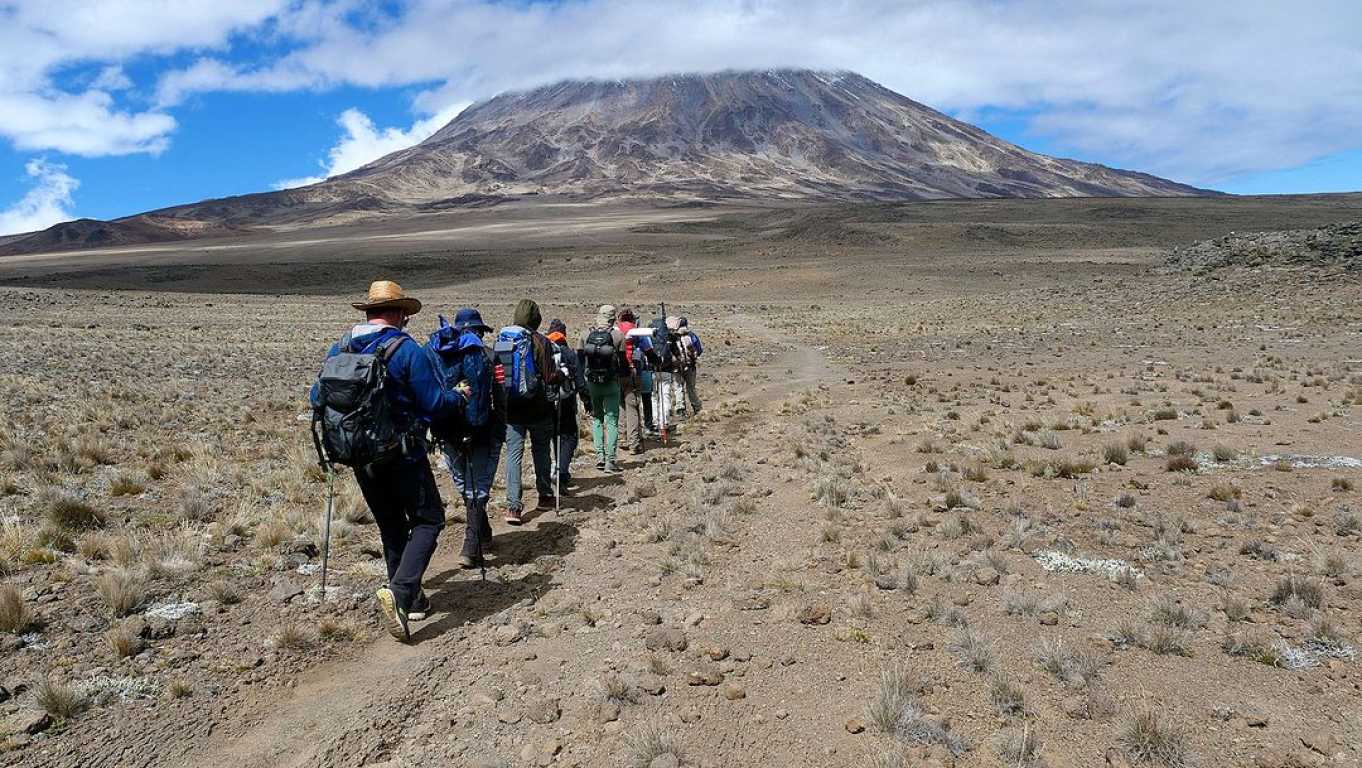
Mount Kilimanjaro has several established climbing routes, each offering a different trekking experience. Choosing a route simply because it is popular or frequently advertised is another mistake worth avoiding.
Some routes are known for their scenic variety, while others offer different accommodation arrangements, trail conditions and trekking durations. Your preferred experience, available time, physical preparation and acclimatization needs should all influence your decision.
The Machame Route is popular for its scenic landscapes and varied terrain. It is commonly completed in six or seven days and includes the famous Barranco Wall section.
The Lemosho Route approaches Kilimanjaro from the western side and is known for its beautiful scenery and longer trekking options. Its seven- and eight-day itineraries are popular choices for climbers seeking more time on the mountain.
The Marangu Route is different because it uses mountain huts rather than the camping arrangements used on most other routes. It is often selected by travellers who prefer hut accommodation, although its shorter five-day version offers limited acclimatization time compared with longer alternatives.
The Rongai Route approaches the mountain from the north and provides a different perspective of Kilimanjaro. It is often completed in six or seven days.
The Northern Circuit is one of the longer routes, offering an extended journey around the northern slopes of the mountain. Its additional trekking time provides more opportunities for acclimatization.
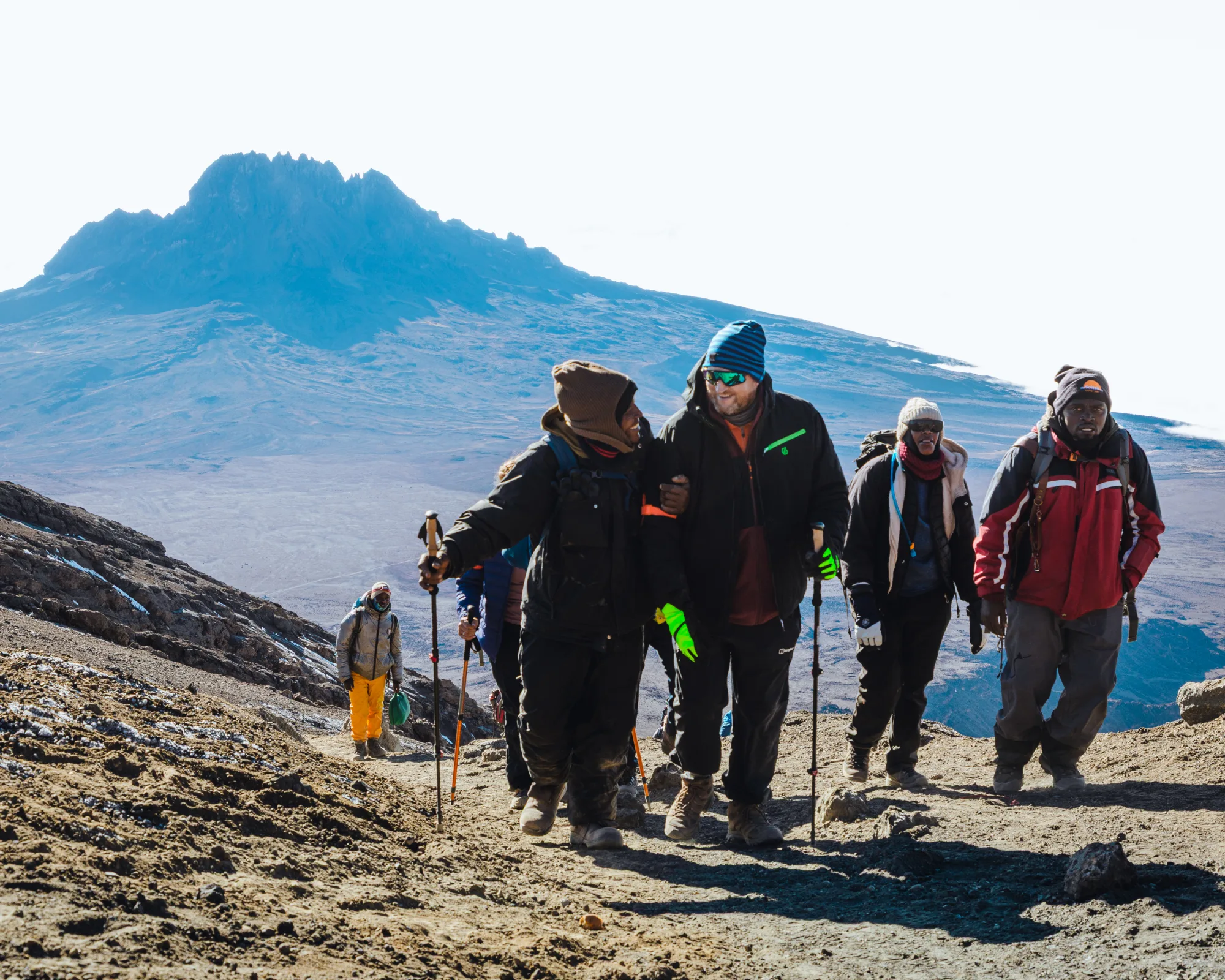
The Shira Route approaches from the western side at a relatively high starting elevation, making it important to consider how your body may respond to the initial altitude.
The Umbwe Route is a steeper and more demanding approach, generally suited to experienced trekkers who understand its challenges and have appropriate support.
What to do instead: Ask your tour operator to explain the differences between the routes, including their duration, daily trekking distances, sleeping elevations, accommodation arrangements and acclimatization opportunities. Choose a route that suits your circumstances rather than following popularity alone.
4. Failing to Check Whether the Tour Operator Is Properly Licensed
Booking with an operator without checking its legitimacy is another serious mistake.
Kilimanjaro climbing is a regulated activity, and independent unguided trekking is not permitted within Kilimanjaro National Park. Climbers must arrange their expedition through an appropriately licensed tour operator with the required mountain guides and support crew.
Before paying a deposit, take time to investigate the company you are considering. Check its official website, business contact information, operating location, reviews and experience arranging Kilimanjaro climbs.
A professional operator should be willing to answer questions about its registration, park arrangements, guide qualifications, mountain safety procedures and the services it provides.
Be cautious when dealing with companies that have no verifiable contact details, provide inconsistent information or pressure you into making an immediate payment. Also, do not assume that an attractive website or large number of social media followers automatically proves that a company is reliable.
If you are booking through an international travel agency, ask which Tanzanian company will actually organize and operate your climb. This is important because the local ground operator is responsible for the arrangements on the mountain.
What to do instead: Verify the operator’s identity, ask for its business details and confirm who will manage your expedition in Tanzania. You should feel comfortable asking questions before committing to a booking.
5. Not Checking What Is Included and Excluded in the Package
A Kilimanjaro climbing quotation can look attractive until you discover that important services are not included.
Different companies may advertise similar packages while offering different levels of service. One quotation may include airport transfers, hotel accommodation and all mountain meals, while another may cover only the climbing arrangements.
Before booking, carefully review the inclusions and exclusions.
A comprehensive Kilimanjaro climbing package commonly includes:
- Kilimanjaro National Park entry and applicable camping or hut fees.
- Required mountain guide and support crew services.
- Private or group transport to and from the mountain.
- Meals and drinking water during the climb.
- Camping equipment on routes that use tents.
- Hut accommodation on the Marangu Route.
- Porter services and mountain logistics.
- Applicable rescue or conservation-related park charges.
- Pre- and post-climb accommodation, where specified.
However, the exact services vary between operators and packages. Some companies include hotel nights, airport transfers, private toilets, sleeping bags or additional equipment, while others offer them as optional extras.
Personal expenses, international flights, visas, travel insurance, tips and certain equipment purchases may also be excluded.
What to do instead: Request a written breakdown of all inclusions and exclusions. Ask whether there are additional costs you should prepare for before arriving in Tanzania. Do not assume that a service is included simply because it is commonly offered by other operators.
6. Ignoring Mountain Safety and Emergency Procedures
Safety should be one of the most important considerations when choosing a Kilimanjaro climbing package.
Some travellers focus heavily on accommodation quality, food and the advertised summit experience without asking how the company manages altitude-related problems and other mountain emergencies.
Kilimanjaro is a high-altitude mountain, and even physically fit climbers can experience altitude-related illness. Good fitness does not guarantee that your body will adjust successfully to the altitude.
Before booking, ask how the company monitors climbers during the trek. Find out whether guides conduct regular health checks, what procedures they follow when someone develops symptoms and how they decide when a climber should stop ascending or descend.
You should also ask about the availability and use of emergency oxygen, first-aid supplies, communication equipment and evacuation arrangements. Clarify what rescue support is provided by the operator and what is covered by your travel insurance.
A responsible guide should take symptoms seriously and never pressure a climber to continue ascending when doing so may put their health at risk. Reaching Uhuru Peak should never be considered more important than a climber’s safety.
It is also important to understand that mountain rescue and evacuation arrangements depend on the location, weather, terrain and available resources. Do not assume that helicopter evacuation is always possible.
What to do instead: Choose a company that can clearly explain its mountain safety procedures, guide training, health-monitoring practices and emergency response arrangements. Make sure your travel insurance specifically covers high-altitude trekking on Kilimanjaro and emergency evacuation.
7. Assuming Physical Fitness Alone Guarantees Summit Success
Being physically prepared is important, but fitness alone does not determine whether you will successfully climb Mount Kilimanjaro.
Some climbers believe that regular gym sessions, running or intensive workouts will automatically prepare them for the mountain. Although physical training helps improve endurance and strength, it cannot guarantee that your body will adapt to high altitude.
Kilimanjaro requires several consecutive days of walking, often over uneven terrain and changing weather conditions. Summit night is particularly demanding, involving a long ascent in cold conditions, usually beginning around midnight.
Your preparation should therefore include cardiovascular endurance, leg strength, balance and regular walking or hiking. If possible, practise walking for several hours while carrying a suitable daypack.
However, physical preparation should go hand in hand with understanding altitude, following your guide’s pace and allowing enough time for acclimatization.
What to do instead: Start training several months before your climb. Include regular walks, hill training, stair climbing and longer hikes where possible. Discuss any existing health concerns or fitness limitations with a qualified healthcare professional before travelling.
8. Overlooking the Treatment and Welfare of Porters
Porters play an essential role in making Kilimanjaro expeditions possible. They transport camping equipment, food, supplies and other necessary items, helping climbers enjoy a supported mountain experience.
Unfortunately, some travellers focus only on the services they receive and overlook the conditions experienced by the people supporting their climb.
When choosing a Kilimanjaro climbing company, ask how the operator treats its mountain crew. Find out whether porters receive appropriate clothing, sleeping equipment, meals, fair payment and reasonable workloads.
You can also investigate whether the company participates in recognized responsible porter welfare initiatives, such as the Kilimanjaro Porters Assistance Project (KPAP) Partner for Responsible Travel programme. If a company claims to be a partner, verify its current status directly through the programme rather than relying only on a logo displayed on its website.
KPAP provides guidance on porter treatment, including proper equipment, food, wages, workload and transparent tipping arrangements.
Tipping is also an important consideration when budgeting for your climb. Ask the operator how many guides, cooks and porters are expected to support your group and how tips are distributed. This helps you prepare fairly and understand the mountain crew arrangements before the trek begins.
What to do instead: Choose a company that demonstrates a genuine commitment to responsible mountain tourism. Ask clear questions about porter welfare and support local operators that respect the people who make your climb possible.
9. Not Reading Reviews and Comparing Previous Climber Experiences
Online reviews can help you understand what to expect from a Kilimanjaro climbing company. However, relying on a single review or judging a company only by its overall star rating can be misleading.
Some travellers make the mistake of booking immediately after seeing a few positive comments on a company’s website or social media pages. Others ignore negative feedback without investigating whether the concerns are relevant.
When reviewing a company, look for detailed experiences from previous climbers. Pay attention to comments about guide professionalism, food quality, communication, equipment, organization, safety and the treatment of porters.
Check several independent platforms where possible, including Google reviews and established travel review websites. Look at how recently the reviews were published and whether the company responds professionally to questions or complaints.
You can also ask the operator for additional information about its previous climbs, group arrangements and guide teams.
Remember that reviews are useful indicators, but they cannot independently prove that a company follows every safety or operational standard.
What to do instead: Read a range of recent reviews and compare the actual experiences described by previous clients. Look for consistency in the quality of service rather than focusing only on star ratings.
10. Booking Without Understanding the Group Size and Climbing Arrangement
Not every Kilimanjaro package offers the same group experience.
Some climbers prefer private expeditions because they want flexibility in daily pacing, departure dates and personal arrangements. Others choose scheduled group climbs because they enjoy meeting people from different countries and sharing the adventure.
A common mistake is booking a group departure without asking how many people will be climbing together.
Large groups may have different logistical requirements compared with smaller groups. They can also involve differences in guide allocation, walking pace, communication and the overall mountain experience.
If you prefer a private climb, confirm whether the package is exclusively for your party or whether other travellers may join. If you are booking a group departure, ask about the expected group size, minimum number of participants, departure confirmation and arrangements if the minimum number is not reached.
Also confirm whether the operator offers different packages for solo travellers, couples, families and groups of friends.
What to do instead: Decide whether you prefer a private climb or scheduled group departure before booking. Ask for written confirmation of the group arrangement and any conditions attached to the departure.
11. Ignoring the Equipment and Packing Requirements
Another mistake is assuming that all the necessary equipment will be supplied by the climbing company.
While many Kilimanjaro operators provide shared camping equipment, dining arrangements and other mountain logistics, climbers are generally responsible for bringing their own personal clothing and essential trekking items.
Packing for Kilimanjaro is different from packing for an ordinary holiday in Tanzania. The mountain passes through several climatic zones, meaning conditions can change considerably as you gain altitude.
You may experience warm temperatures in the lower forest areas, cooler conditions on the moorland and alpine desert, and freezing temperatures near the summit.
Your packing list should include suitable hiking boots, thermal base layers, insulating clothing, a waterproof jacket and trousers, warm gloves, a hat, trekking socks, a headlamp, sunglasses and sun protection.
Other useful items include a comfortable daypack, refillable water bottles, personal medication, toiletries and suitable sleeping equipment if it is not provided by the operator.
Do not wait until the last few days before departure to organize your equipment. Buying unfamiliar hiking boots shortly before your climb can result in discomfort and blisters.
What to do instead: Request a detailed packing list from your tour operator and confirm which items are provided, available for hire or must be brought from home. Test your boots, clothing and backpack before arriving in Tanzania.
12. Forgetting to Check Accommodation Before and After the Climb
Your Kilimanjaro experience does not begin and end at the park gate. You will usually need accommodation in Moshi or the surrounding area before and after your trek.
Some travellers assume that every climbing package includes hotel accommodation, airport transfers and meals outside the mountain. However, these arrangements vary between operators.
Before confirming your booking, ask where you will stay before the climb, whether a briefing is included, and whether accommodation is arranged after descending the mountain.
It is also worth checking whether the hotel is located in Moshi or another area, what type of room is provided and whether breakfast or other meals are included.
A comfortable night before starting your trek can help you organize your equipment and rest before the climb. Similarly, allowing time to recover after descending is a sensible part of your travel plan.
If you are combining Kilimanjaro with a Tanzania safari or Zanzibar beach holiday, avoid arranging an excessively tight schedule immediately after your descent.
What to do instead: Confirm all pre- and post-climb accommodation arrangements in writing. Allow sufficient time for rest and recovery before continuing with other travel activities.
13. Making a Payment Without Reading the Booking Terms and Cancellation Policy
Before paying a deposit, make sure you understand the company’s booking conditions.
Some climbers focus so much on securing their preferred dates that they overlook important financial and administrative details.
Your booking terms should explain the deposit amount, payment deadlines, cancellation conditions, refund arrangements and procedures for changing travel dates.
You should also understand what happens if a group departure does not reach its minimum number, if you need to postpone your climb or if unforeseen circumstances affect the planned expedition.
Ask whether park fees and other non-refundable costs are treated differently from the operator’s service charges. These details can influence how much money may be refunded if plans change.
Use official company payment details and request a written confirmation or receipt for every transaction. Avoid sending money to personal accounts unless the operator has clearly explained and formally authorized the arrangement.
What to do instead: Read the full booking terms before paying. Make sure you receive written confirmation of your selected route, dates, package price, inclusions, exclusions and payment conditions.
14. Failing to Consider the Best Time for Your Kilimanjaro Climb
Mount Kilimanjaro can be climbed throughout the year, but weather conditions vary between seasons.
Some travellers book their preferred dates without considering rainfall, trail conditions, visibility and the type of mountain experience they want.
The two commonly preferred periods for climbing are generally January to early March and June to October. These periods often offer more favourable trekking conditions, although weather on the mountain is unpredictable and can change at any time.
January to early March can provide relatively clear conditions, while June to October is another popular period for trekking. April and May are generally associated with heavier rainfall, although some climbers still choose to travel during these months.
The best time also depends on your preferred route, available dates, budget and tolerance for changing weather conditions.
Peak climbing periods can be busier, making it important to arrange your preferred dates and accommodation in advance.
What to do instead: Discuss your preferred travel month with your operator. Ask about expected weather conditions, route suitability, group departure dates and the availability of accommodation before confirming your booking.
15. Planning Too Many Activities Immediately After the Summit
Many travellers want to combine their Kilimanjaro climb with other experiences in Tanzania, such as wildlife safaris, cultural tours or Zanzibar beach holidays.
This is a wonderful way to explore the country, but planning too many activities immediately after the trek can make your holiday unnecessarily tiring.
A Kilimanjaro expedition involves several days of physical activity, high-altitude exposure and changing sleeping conditions. Even after successfully descending, you may need time to rest, recover and organize your belongings.
Some travellers make the mistake of booking an early flight, a long road transfer or a full-day safari immediately after descending the mountain.
Although travel arrangements differ for each person, allowing a recovery period after the climb is a sensible approach. It also gives you some flexibility if the descent takes longer than expected or if you need additional time to rest.
What to do instead: Plan your safari, Zanzibar holiday or other activities around your climbing schedule. Discuss the transfer arrangements with your operator and leave sufficient recovery time before continuing your journey.
How to Choose the Right Kilimanjaro Climbing Package
Avoiding these mistakes starts with choosing a climbing package that matches your travel plans, budget and personal requirements.
A good Kilimanjaro package should provide clear information about the route, number of days, accommodation, meals, mountain crew, safety arrangements and all applicable costs.
Before making your final decision, consider the following questions:
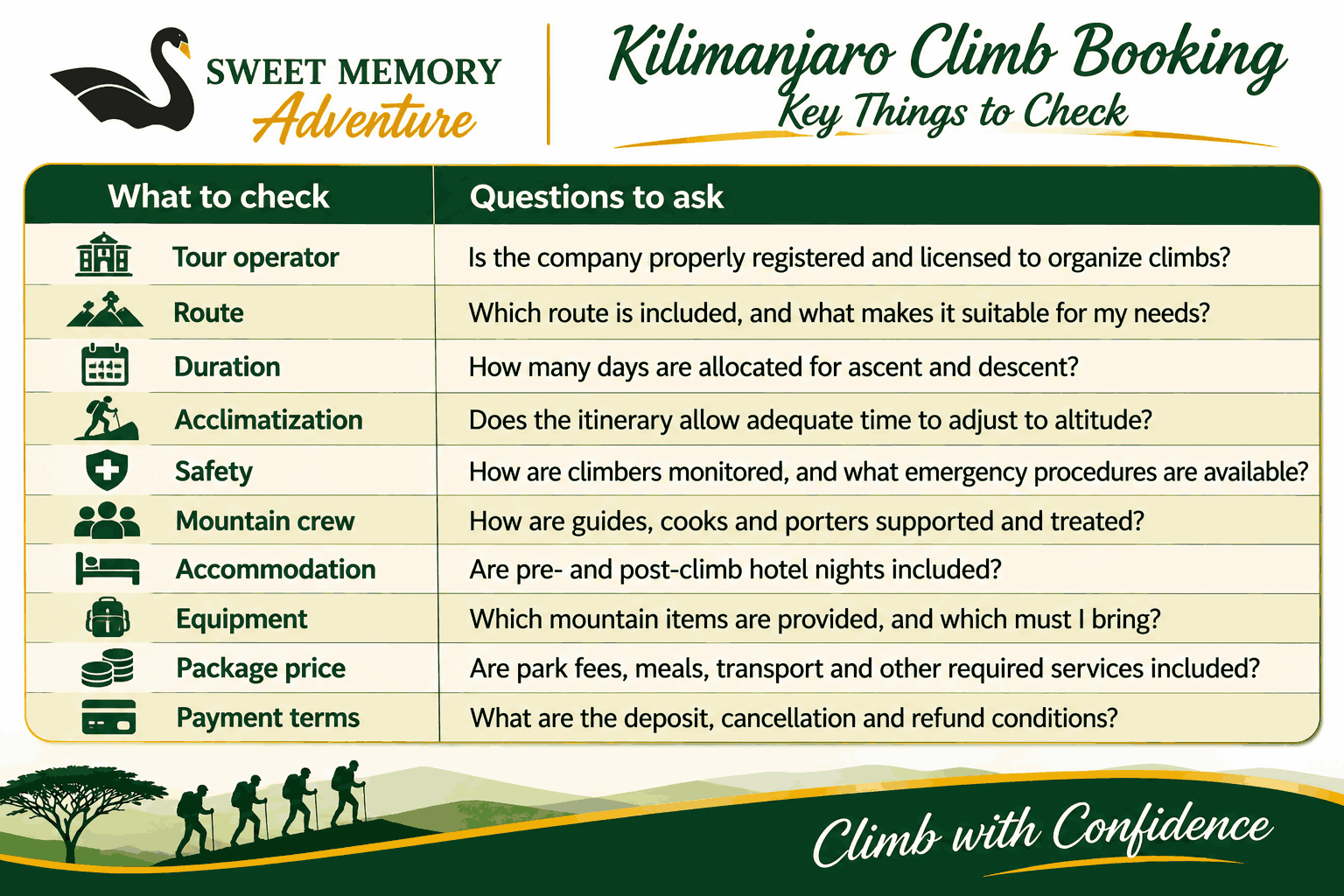
Taking time to ask these questions can help you compare operators more confidently and reduce the risk of unexpected problems during your trip.
Why Book Your Kilimanjaro Climb with Sweet Memory Adventure?
Choosing a reliable local tour operator is an important part of planning your Kilimanjaro adventure. Sweet Memory Adventure is a Tanzania-based tour operator in Moshi, offering private Kilimanjaro climbs and scheduled group departures for travellers who want to experience Africa’s highest mountain.
Our team understands the importance of proper preparation, clear communication and personalized travel arrangements. We help climbers compare routes, select suitable trekking durations and organize the services required for their mountain adventure.
Whether you are interested in the scenic Machame Route, the longer Lemosho Route, the hut-based Marangu Route, the northern approach via Rongai or the extended Northern Circuit, we can help you explore the available options.
We also arrange climbs for solo travellers, couples, families and groups of friends, with private and scheduled group options depending on availability.
Our approach focuses on helping you understand your package before booking. We encourage travellers to ask questions about route selection, acclimatization, accommodation, mountain equipment, safety arrangements and porter welfare so that they can make informed decisions.
Plan your Kilimanjaro adventure with Sweet Memory Adventure and let our local team help you prepare for an unforgettable mountain experience.
Contact our team:
- WhatsApp/Call: +255 756 775 771
- Email: info@sweetmemoryadventure.com
- Website: https://sweetmemoryadventure.com/
Frequently Asked Questions About Booking Kilimanjaro Climbing Packages
1. What should I consider before booking a Kilimanjaro climbing package?
Before booking, consider the tour operator’s legitimacy, route, trekking duration, acclimatization opportunities, package inclusions, safety procedures, accommodation, mountain crew welfare and cancellation policy. Compare detailed quotations rather than selecting a package based only on price.
2. How many days should I book for climbing Mount Kilimanjaro?
Many climbers consider itineraries of seven to nine days or longer, depending on the route and individual circumstances. Longer itineraries can provide additional opportunities for acclimatization. The best duration depends on the route’s elevation profile, your experience and the advice of your climbing operator.
3. Which Kilimanjaro route is best for beginners?
There is no single route that is best for every beginner. Machame and Lemosho are popular options, particularly when planned over longer durations. Marangu offers hut accommodation, while Rongai provides a northern approach. Beginners should compare route duration, daily elevation changes and acclimatization opportunities before deciding.
4. Is the cheapest Kilimanjaro climbing package a good choice?
Not necessarily. A low-priced package may exclude important services or offer a different level of support. However, a high price does not automatically guarantee better quality. Compare inclusions, safety arrangements, guide experience, equipment, accommodation and porter welfare before making your decision.
5. Are park fees included in Kilimanjaro climbing packages?
Many comprehensive packages include the applicable park entry, camping or hut and other required park charges. However, inclusions differ between operators. Always request a detailed quotation and confirm which fees are covered.
6. Can I climb Kilimanjaro without a guide?
No. Kilimanjaro National Park requires climbers to arrange their expedition through an authorized operator with licensed guides. Independent unguided climbing is not permitted.
7. Does physical fitness prevent altitude sickness?
No. Physical fitness helps prepare your body for the physical demands of trekking, but it does not guarantee protection from altitude sickness. Acclimatization, gradual ascent and proper monitoring are important regardless of your fitness level.
8. What happens if I cannot continue climbing because of altitude sickness?
Your guides should assess your condition and follow appropriate safety procedures. Depending on the circumstances, this may involve stopping the ascent and arranging a descent or evacuation. Always discuss emergency procedures with your operator before booking.
9. Should I book a private Kilimanjaro climb or join a group departure?
A private climb offers more flexibility for your party, while a scheduled group departure allows you to share the experience with other travellers and may offer a different price structure. Your decision should depend on your preferred travel dates, budget, group size and trekking preferences.
10. How far in advance should I book a Kilimanjaro climbing package?
Booking several months ahead is a sensible approach, especially for popular climbing periods and specific group departure dates. Early planning gives you more time to compare operators, organize international flights, prepare physically and arrange your equipment.
11. What is normally excluded from Kilimanjaro climbing packages?
Common exclusions include international flights, visas, travel insurance, personal trekking equipment, tips, personal expenses and additional hotel nights not specified in the quotation. Always check the exclusions because they vary between companies.
12. Can I combine a Kilimanjaro climb with a Tanzania safari or Zanzibar holiday?
Yes. Many travellers combine their Kilimanjaro adventure with wildlife safaris in destinations such as Serengeti, Ngorongoro and Tarangire, or continue to Zanzibar for a beach holiday. It is advisable to allow time for recovery after the climb before starting another demanding activity.
Final Thoughts: Make an Informed Decision Before Booking Kilimanjaro
Booking a Kilimanjaro climbing package is an important investment in an experience that can stay with you for a lifetime. However, choosing the right company and itinerary requires more than comparing prices and selecting the first available departure.
Take time to understand the different routes, consider the importance of acclimatization, check what your package includes and investigate how your operator manages mountain safety and crew welfare.
A well-planned climb should provide clear information, realistic expectations and appropriate support throughout the journey. By avoiding the common mistakes discussed in this guide, you can prepare more confidently and make better decisions before travelling to Tanzania.
Ready to plan your Kilimanjaro climb? Contact Sweet Memory Adventure for information about private climbs and scheduled group departures via Machame, Lemosho, Marangu, Rongai and the Northern Circuit.
Let our local Tanzania team help you find a climbing package that matches your travel plans, preferred route and budget.